
The story of Never Doit
Like all good stories it starts with a suggestion, and in this case, it was a remark passed, in jest, when I joined the Northolt Model Railway Club 8 years ago.
I was not sure what section to join so I sampled the OO section and met Ian West and Colin Thompson and then sampled the O gauge section and met Bob Joy.
Bob explained the ins and outs of the O gauge world and After a short period of time I was bitten by the O gauge bug.
During the next few months I was talking about my OO collection and what I had started as an OO layout and Bob suggested, in jest, that I sell all my OO stock and concentrate on O gauge, and I replied I’d never do it as most of my OO stock has a personal story behind it. Bob then asked what my favourite loco was, to which I replied Class 33. As he was going to a show he’d try and get one for me, which he was not successful.
The idea was to have a layout that would accept 6 car trains, but after working out the overall dimensions this would be impractical due to the length of the layout.
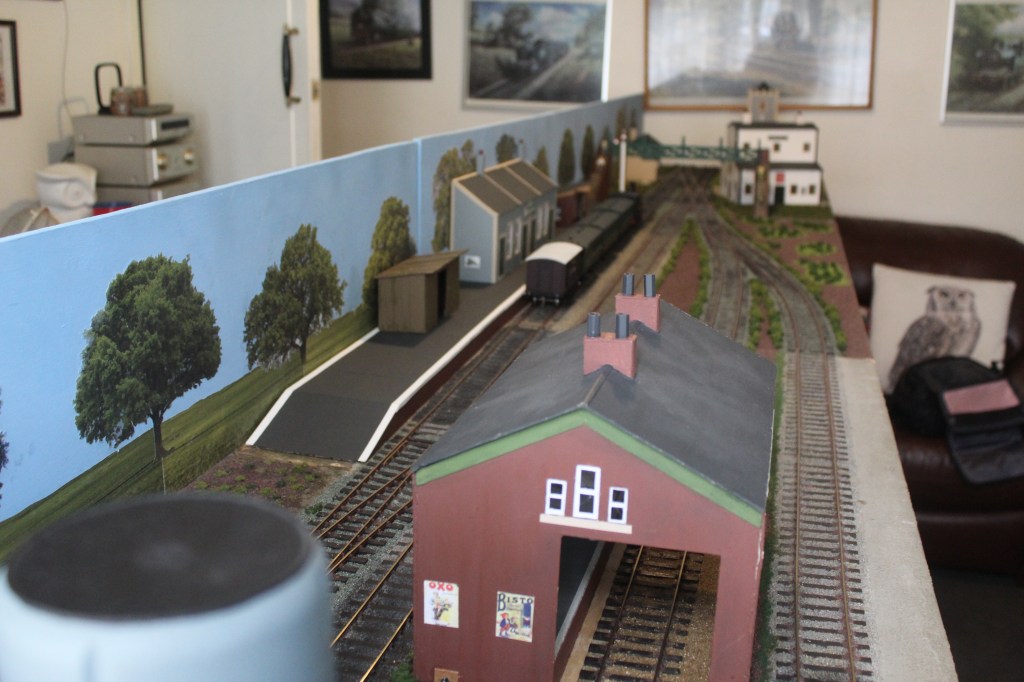
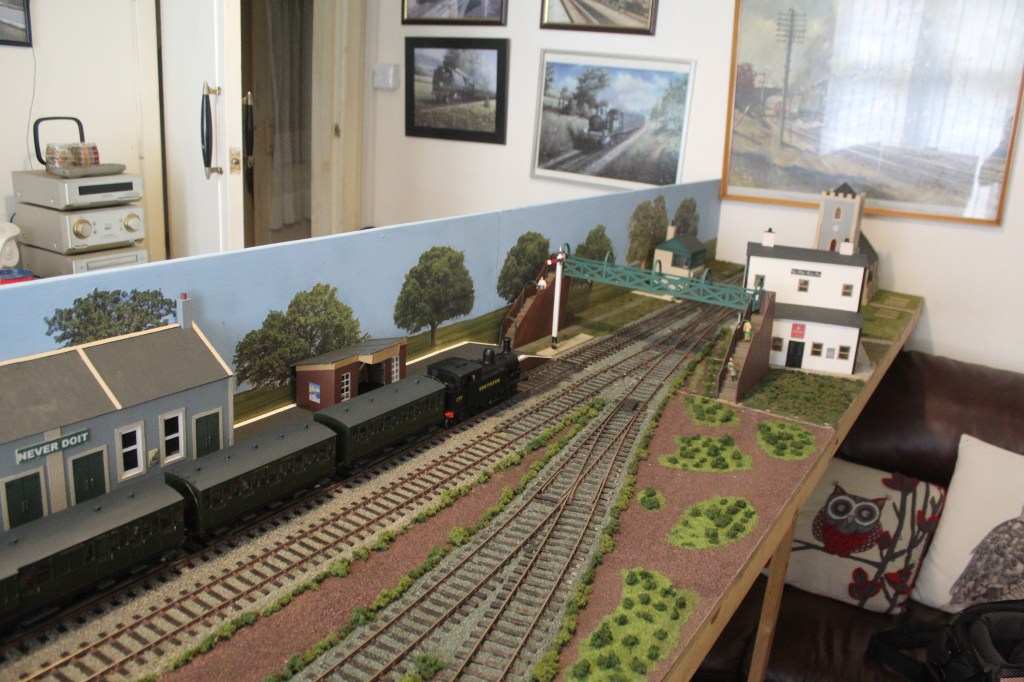
After much thought and lots of conversations with Bob, I decided to go for an end-to-end branch line with a passing loop in the station and a 2-road goods yard. At the other end would be a 6-road storage yard.
I spent the next few weeks using SCARM, a computer-based design programme, to come up with a layout suitable to my wants. I also printed off Peco track templates and crawled on the front room floor laying out the track plan of my desire. It took a while, and sore knees, to come up with the final version of what is now my O gauge layout Never Doit.
The base boards are made from 2×1 timber and topped out with 12mm MDF, it makes it heavy but Sturdee. I now had the costly task of purchasing the track, which was 5 left hand points, 4 right hand points, 1 double slip and 3 boxes of flexi track.
The track layout was altered recently, on the advice of Bob Joy & Dave Taylor, as the running operations were a little awkward. When finished I could see a vast improvement in looks as well as operating the layout.
As the ready-made buildings were a bit expensive at the time, I decided to make my own.
I started on the goods shed as this looked to be the easiest to do. Using my OO goods shed I did the maths to get the measurements in O gauge and then gathered the cornflake, Rice Krispies and Bran Flakes packet cardboard together. Weetabix & Shredded Wheat were too “papery” for my liking. Then started measuring and cutting out the walls & roof parts.
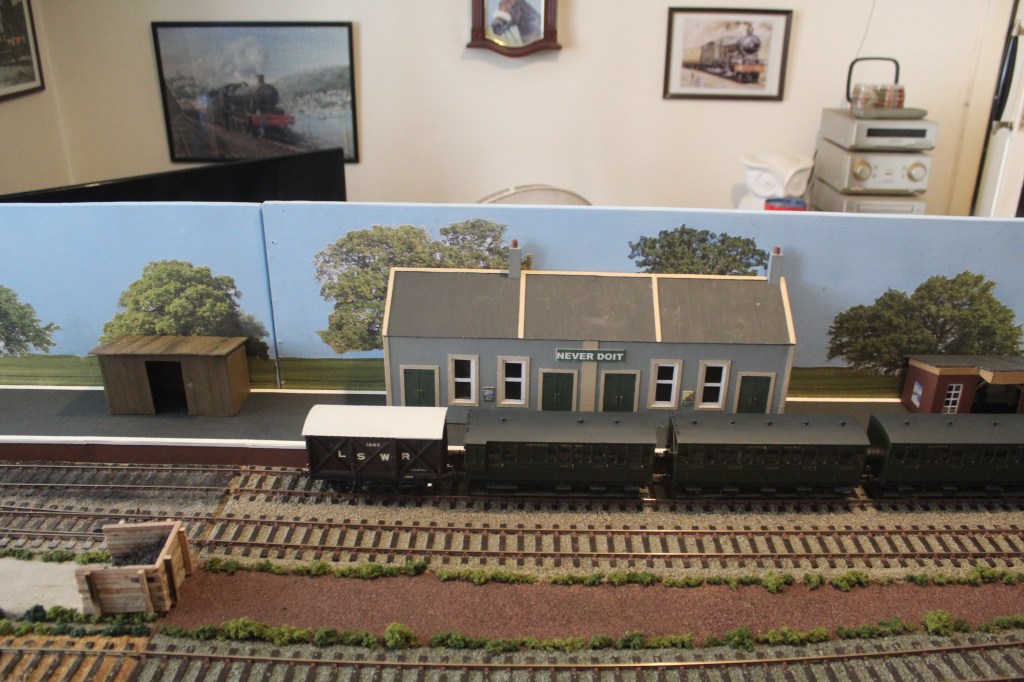
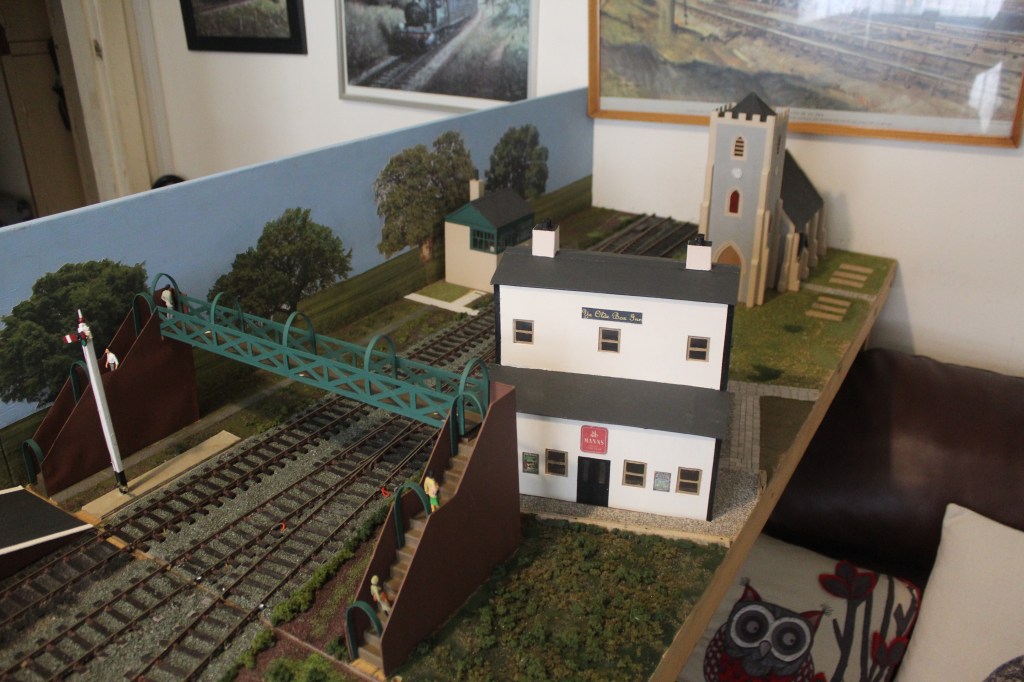
The same process was used for the church, which was a Ratio kit. The station building was a sized up ½ relief version of the Hornby Dunster station building. The pub, Ye Olde Box Inn, is totally scratch built but based on The Wolf in Norwood Green. The station shelters are made from ice lolly sticks. The platform is a sized-up version of the Hornby platform pieces which have now been replaced by laser cut kits. These are slightly wider than the originals, but with a bit of fettling made fit for purpose.
The signal box was also originally a copy of the Hornby one but has now been replaced with a laser cut kit with cabin detail.
The one and only signal is a mixture of kit parts and a spent fire work stick from a large rocket.
Locos and Passenger rolling stock are a mix of ready to run and Kit built.
There is always something to do as a model railway is never finished. You can always find something to enhance the appearance.
So for now I will rest on my laurels and admire my handy work until another idea pops into my head or a suggestion is put to me.
Perhaps like the previous post of the viaduct which will be beyond the church. It acts as a scenic break hiding the storage yard.
 Northolt Model Railway Club
Leave a comment